Cambridge is the kind of city that rewards curiosity. A short walk down an ordinary street can lead you to a 400-year-old cemetery, a Picasso sculpture, or a wonderland of hands-on science and mind-blowing discoveries. Whatever draws you in, here is your guide to some of the city’s most fascinating and surprising spots.
Where the Past is Still Present
Cambridge’s past is not tucked away in textbooks. It is right outside, waiting to be explored.
The Old Burying Ground in Harvard Square dates back to the 1600s and is the final resting place of Cambridge’s earliest settlers and Harvard’s first presidents, including Henry Dunster and Washington Allston, all just steps from the bustle of the Square.
Down Brattle Street, the Longfellow House – Washington’s Headquarters National Historic Site is an elegant Georgian mansion that served as George Washington’s military headquarters in 1775, and was later the home of poet Henry Wadsworth Longfellow for nearly 45 years. Free guided tours are available late-May through October, but the grounds and garden are open to explore year-round.
To continue your curious history exploration, the Peabody Museum of Archaeology & Ethnology on Divinity Avenue is one of Cambridge’s most underrated spots. Founded in 1866, it holds towering Native American totem poles, life-size casts of Maya monuments, over 5,000 ancient Peruvian textiles, and the largest surviving collection of artifacts from the Lewis and Clark Expedition. Best of all, one ticket gets you into both the Peabody and the adjacent Harvard Museum of Natural History. Two of Cambridge’s most extraordinary museums, one easy visit.
Cambridge Builds Differently
From centuries-old colonial brick to bold and experimental architecture from more modern eras, Cambridge is a walking tour in itself. The MIT Campus is home to buildings that must be seen to be believed. Frank Gehry’s Stata Center features tilted walls and extreme angles to look like a building mid-collapse. In contrast, Eero Saarinen’s MIT Chapel showcases a strong cylindrical brick structure with a moat and a Harry Bertoia altar. Pick up a free map at the MIT Welcome Center and start wandering.
Brand-new as of August 2026, the Met Warehouse is one of the many different exciting architectural stories in Cambridge right now. This 1894 Victorian brick fortress on Massachusetts Avenue has been given an entirely new purpose after architects Diller Scofidio and Renfro transformed it into MIT’s School of Architecture and Planning, with studios, exhibition spaces, and a public commons. Original brick archways are deliberately left exposed so visitors can see the layers of transformation firsthand.
And just down the road in Kendall Square, The Platform, a stunning new 45,000 square foot performing arts center with an ascending terracotta exterior, opens its doors this fall as the new home of Global Arts Live. Cambridge’s architectural story is very much still being written.
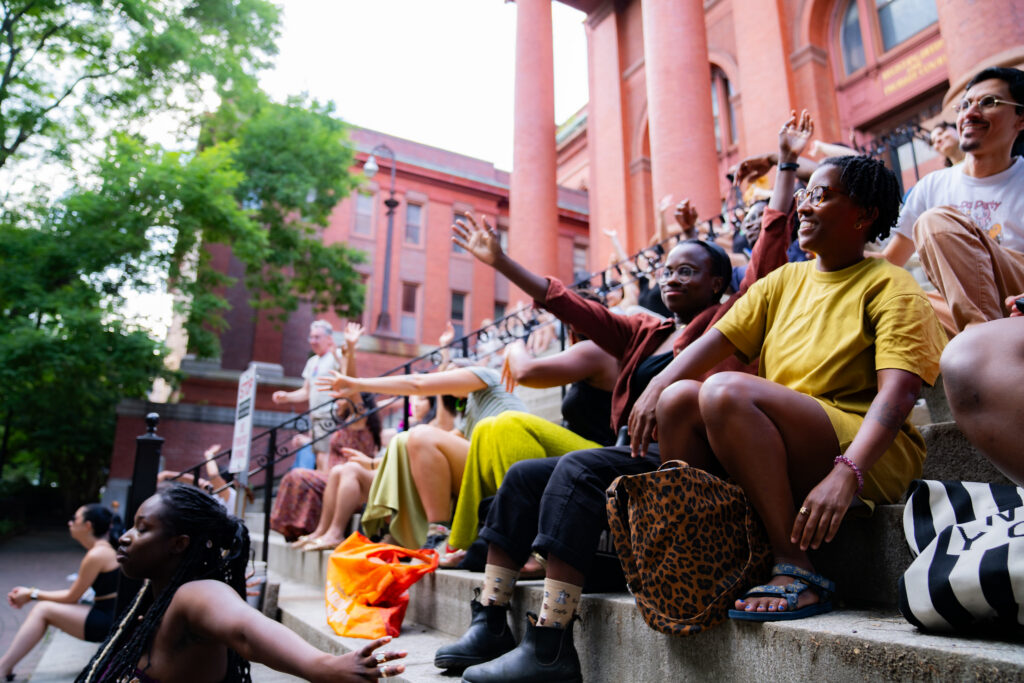
Over in East Cambridge, the Multicultural Arts Center is a restored 1880s Victorian courthouse with a breathtaking two-story theater, an ornately embellished ceiling, and a wraparound mezzanine balcony that makes it feel more like a European cultural hall than a Cambridge side street. Beyond the building itself, the Multicultural Arts Center hosts a full calendar of live performances, concerts, cultural events, and community programming year-round, making it as vibrant inside as it is beautiful to look at.
Looking a Little Closer
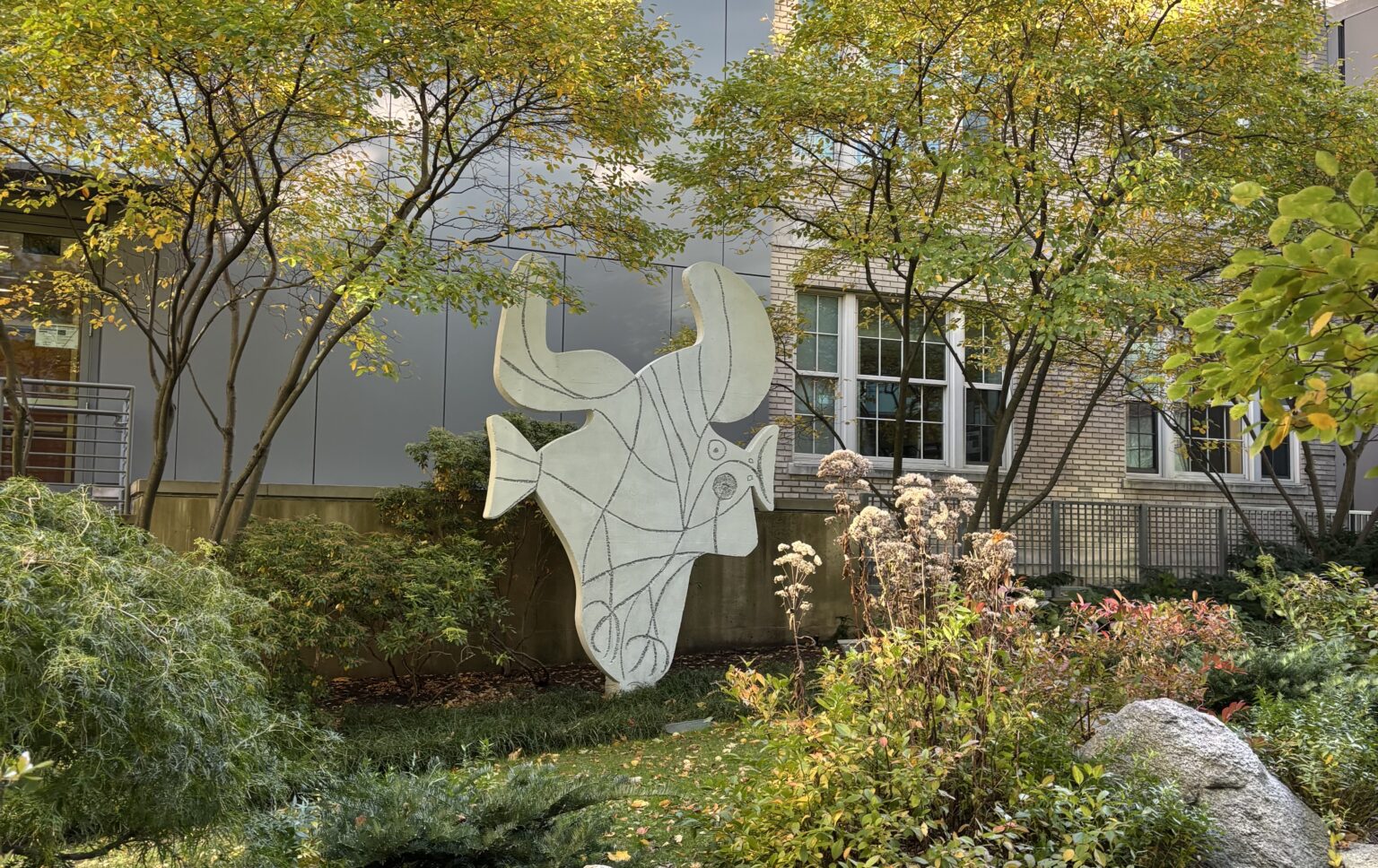
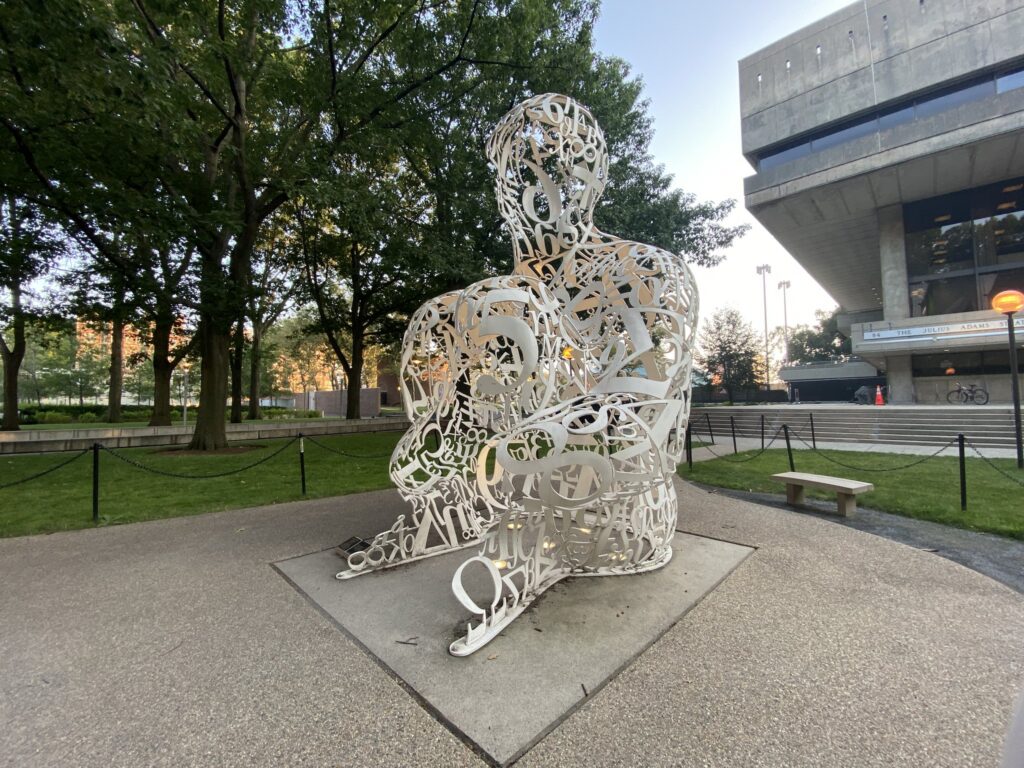
Cambridge has over 100 public art installations across its 6.4 square miles, and some of the best are completely free. The MIT Public Art Collection features over 60 works across campus by Calder, Picasso, Henry Moore, Louise Nevelson, and Sol LeWitt. Calder’s 40-foot “Big Sail” in front of the Green Building is a showstopper, but the rest of the collection is equally worth the trip.
The Glass Flowers at the Harvard Museum of Natural History are a Cambridge must-see. Father-and-son glass artists Leopold and Rudolf Blaschka hand-crafted 3,000 botanically precise plant models between 1886 and 1936, so lifelike that botanists still use them as scientific reference today. The museum is free for Massachusetts residents on Sunday mornings and Wednesday afternoons.
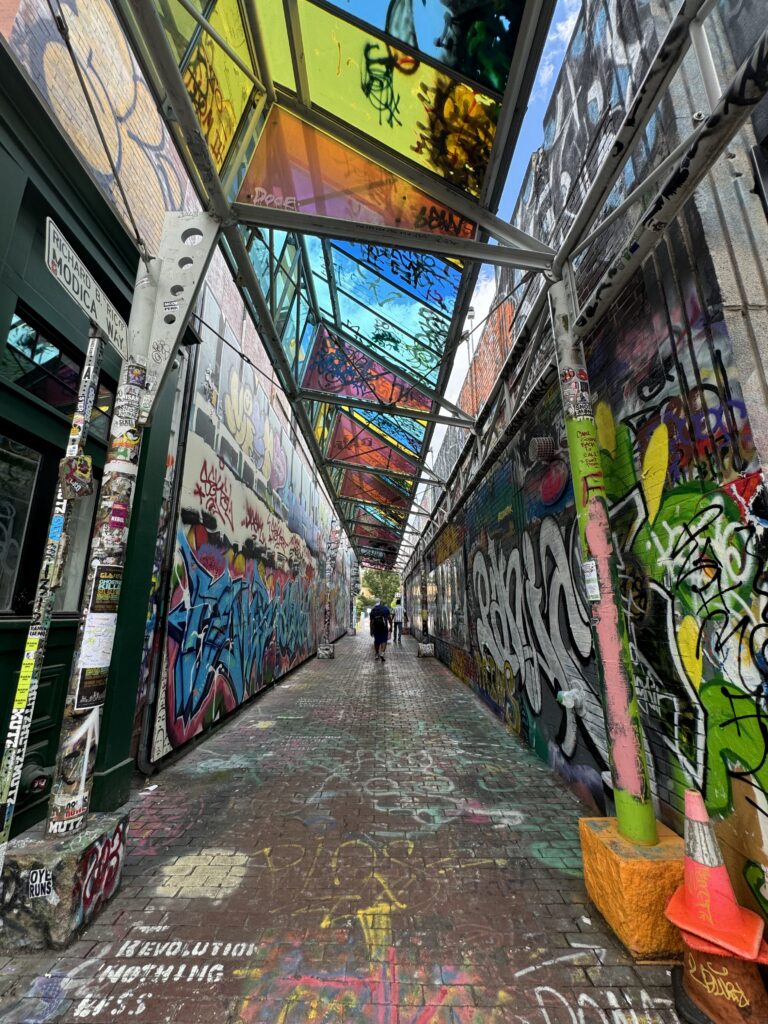
In Central Square, Modica Way, known as “Graffiti Alley,” is an 80-foot public walkway that doubles as one of the only legal graffiti spaces in Greater Boston. Shaded by a colorful stained-glass canopy and ever-changing, no two visits look the same. Free, open 24 hours, and very Cambridge. If you want to dig deeper into Central Square’s public art scene, Off the Beaten Path Food Tours runs a Central Square Food and Mural Arts Tour every Tuesday evening and Sunday afternoon, combining Cambridge’s best murals, hidden art passageways, and local independent restaurants into one guided two-hour experience.
Where Curiosity Meets Discovery
Cambridge sits at the intersection of some of the most important scientific thinking in the world, and a surprising amount of it is open to the public. The MIT Museum in Kendall Square is where science, art, and technology collide. Interactive exhibits on robotics, AI, and MIT history make it worth a full afternoon. The holography collection alone is worth the trip.
The Museum of Science in East Cambridge offers over 700 interactive exhibits, a planetarium, New England’s only IMAX Dome screen, and an indoor lightning storm in the Theater of Electricity. A marker embedded in the museum floor marks exactly where Cambridge ends and Boston begins.
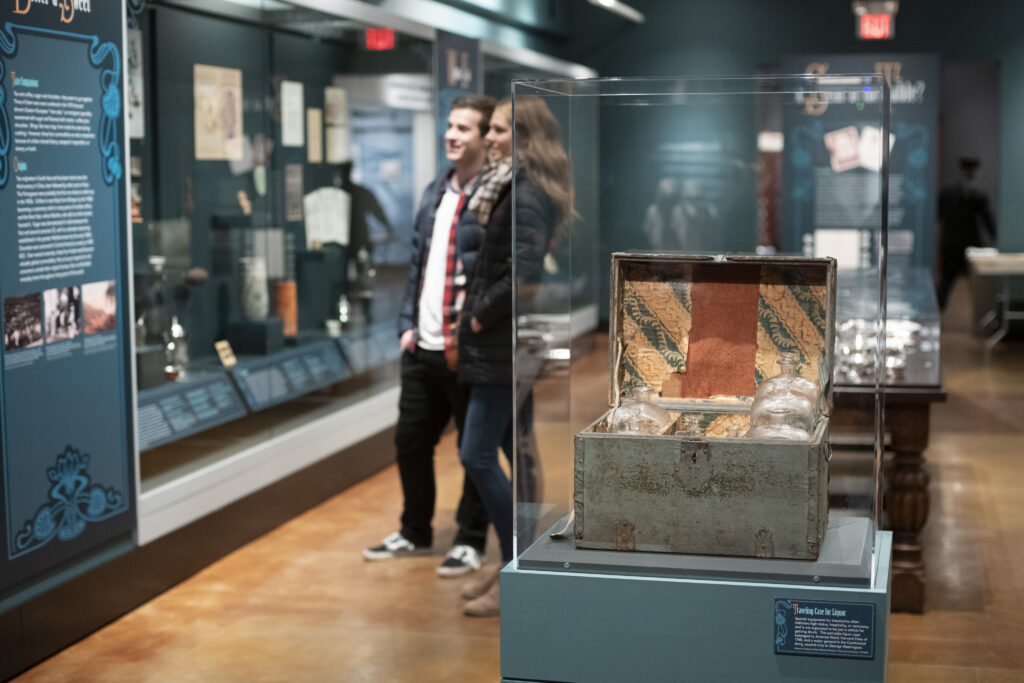
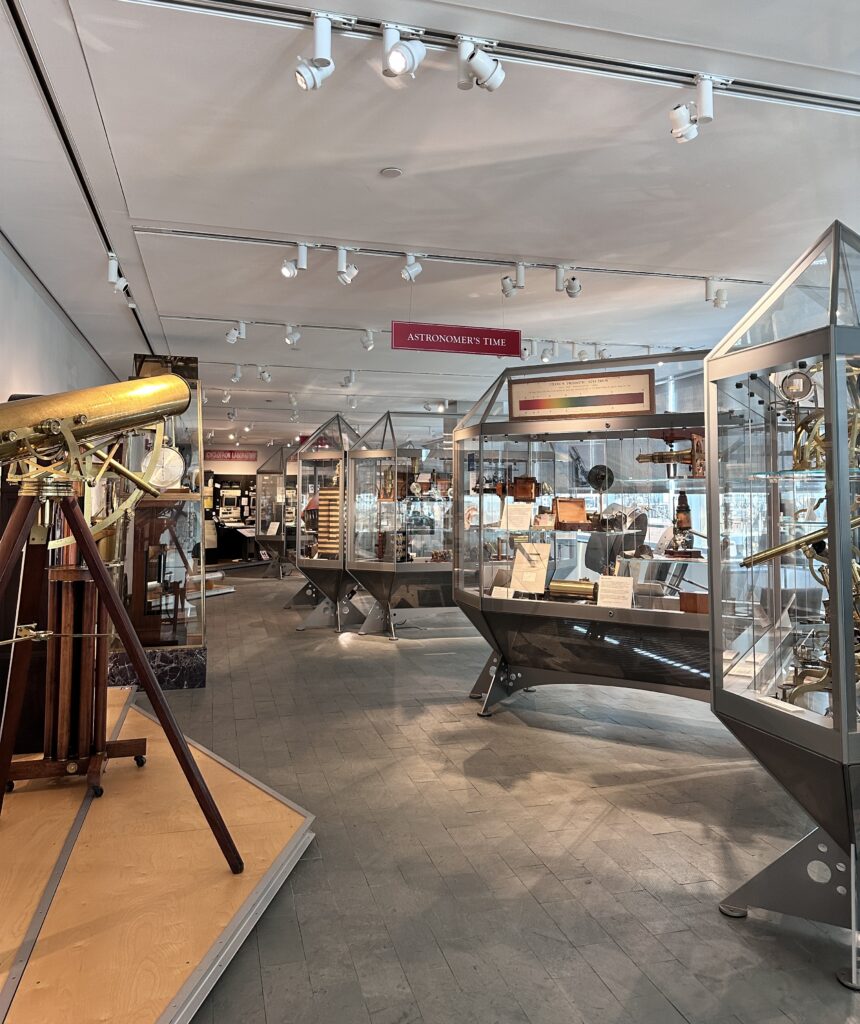
One of Cambridge’s most overlooked gems is Harvard’s Collection of Historical Scientific Instruments at the Science Center on Oxford Street. The free museum houses over 20,000 objects spanning four centuries of scientific discovery, from hand-crafted astrolabes and early electrical machines to the personal instruments of scientists who changed the way we understand the world.
Cambridge has a way of making you feel like you found something the rest of the world has not quite discovered yet. The city rewards the curious, the wanderers, and the ones who take the time to look a little closer. Cambridge can often surprise even those who think they know it well. Come see what you have been missing.